Next Generation Building Envelope

Learn more

Our building-integrated BIPV solution combines photovoltaics, solar thermal energy, and wind energy directly within the building envelope. The system offers a cost advantage of up to 50% compared to conventional solutions, is eligible for multiple grants, and is both efficient and aesthetically integrated.

+ For roofs and facades
+ Three types of energy combined
+ 50% cheaper
+ Can also be conveyed up to 4 times
+ Homogeneous appearance
+ Producable in all dimensions

Building Envelope
of the Future

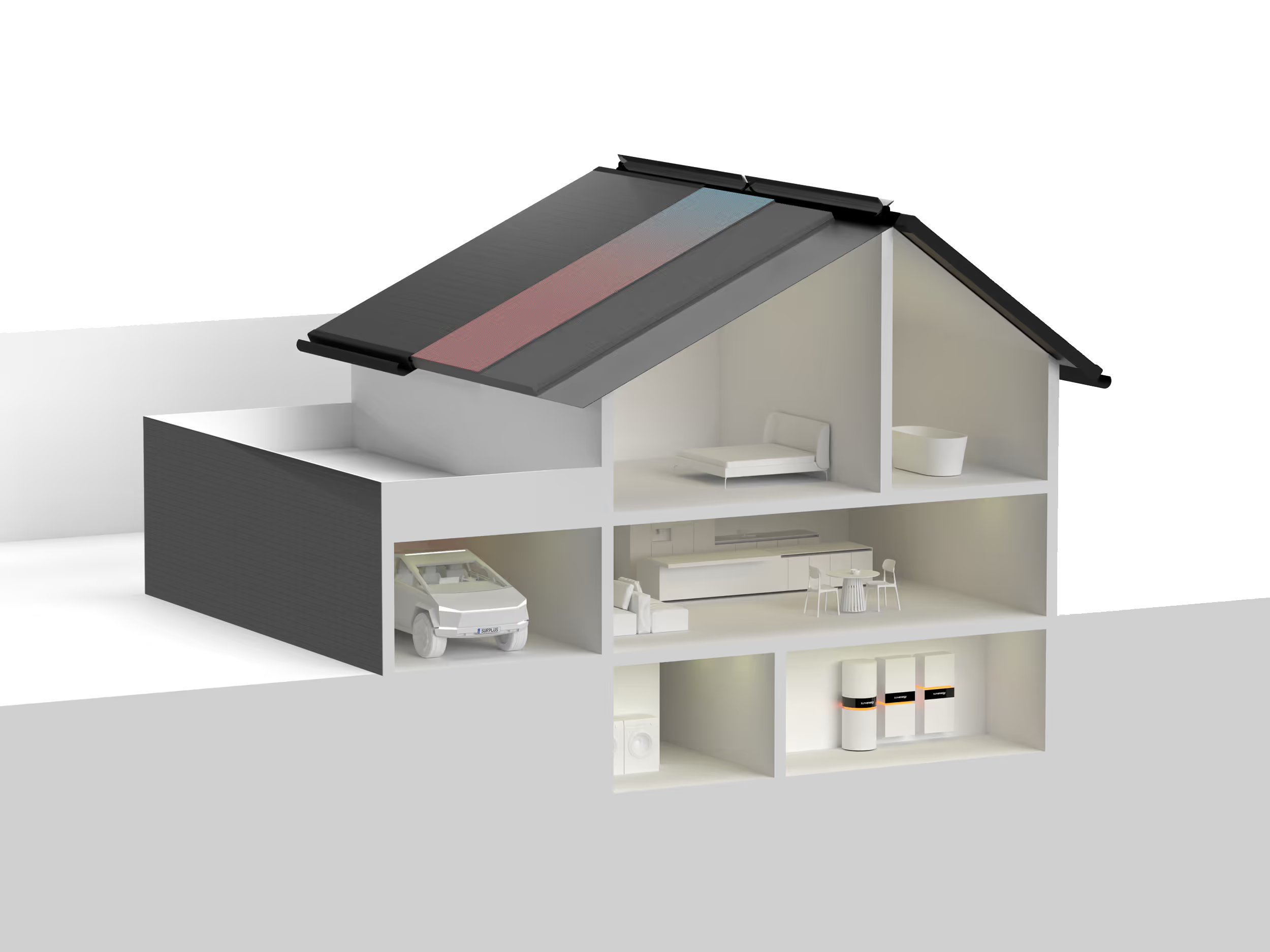
Three energy forms combined in one system. The interplay of cutting-edge materials like carbon fiber-reinforced insulation with photovoltaic surfaces, combined with solar thermal and wind energy, creates a self-sustaining building envelope for the next generation.
Benefits for manufacturersBenefits for end customers

The Facade as a complete Solar Power Plant

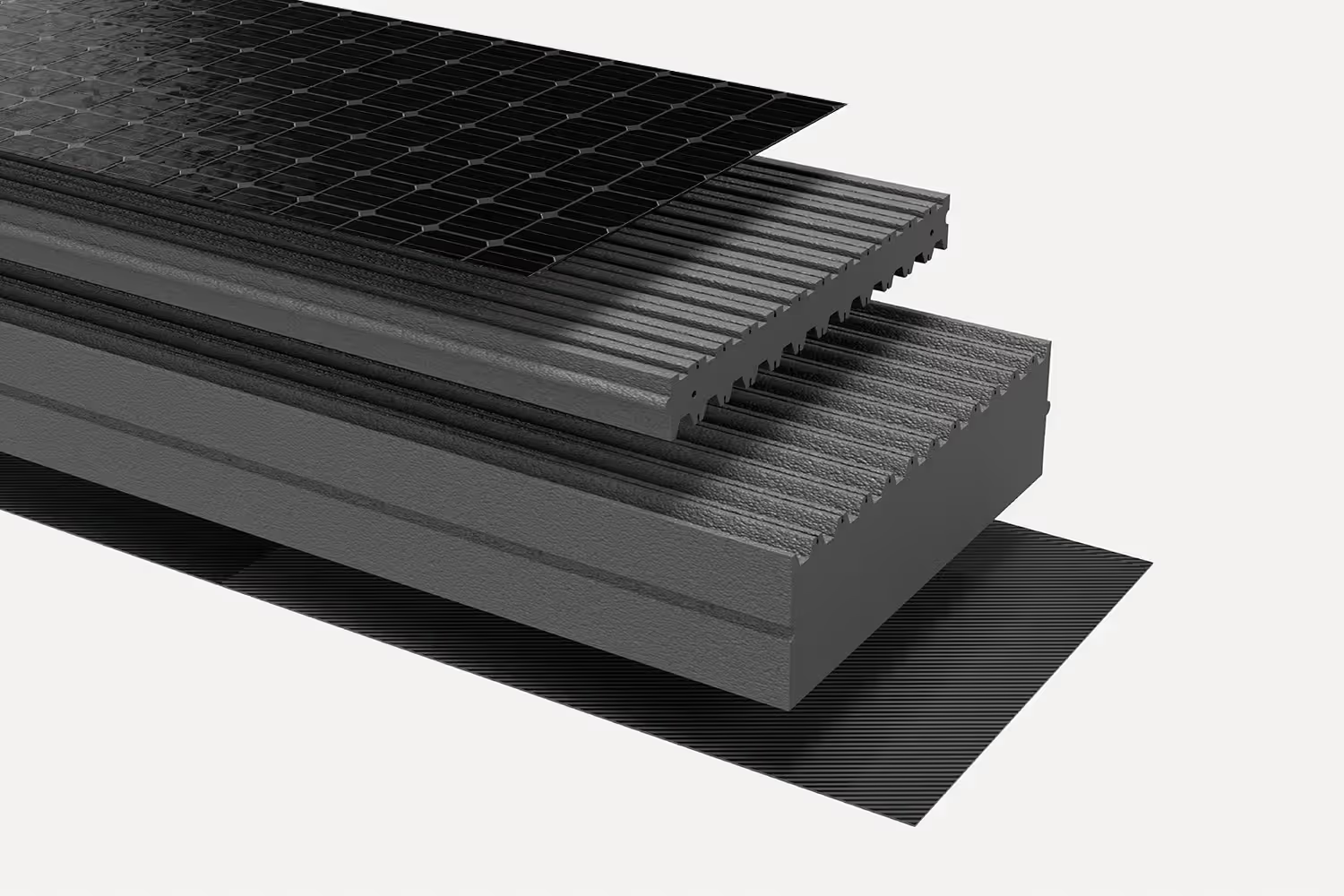
The ultra-thin and flexible solar film can conform to almost any shape and can be produced in various colors and designs. Its special surface structure with a lens effect means precise alignment to the sun is not required. The self-cleaning surface with golf ball technology also protects against dirt and the elements.
Learn more

Intelligent Solar Thermal Energy with additional functions

Beneath the PV film are guide grooves for the integrated solar thermal system. The heated medium can be stored in the heat pump and used for heating or hot water. In addition, the cool medium increases the efficiency of the PV film.
Learn more

Generate nergy without interruption

Our innovative building envelope ensures continuous energy production, even when there's no sun. The integrated wind turbine in the roof ridge converts wind power into electrical energy. The roof's pitch and the smooth photovoltaic film optimize wind uplift, while the turbine's flexible mounting minimizes disruptive noise.
Learn more
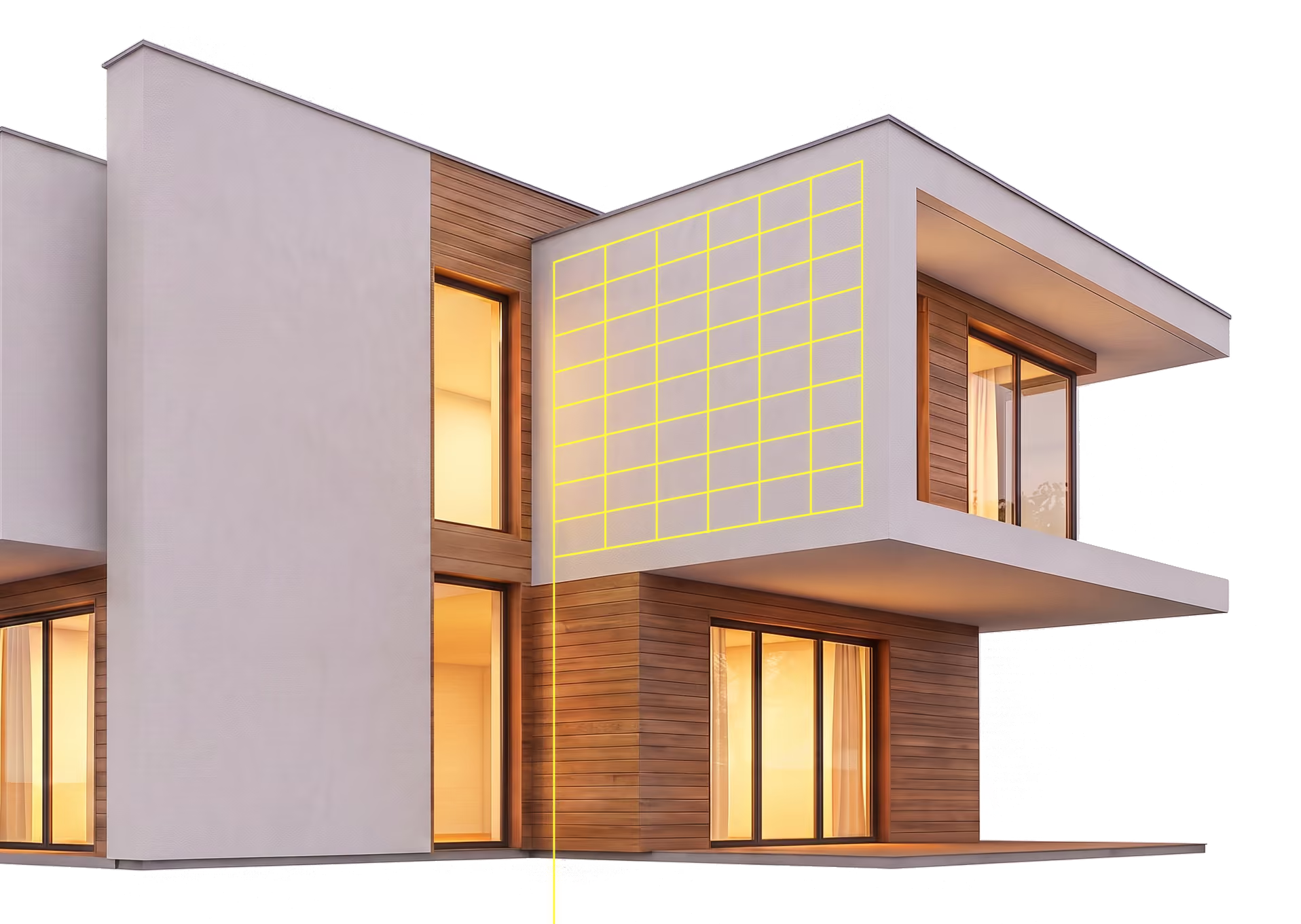
The building envelope is primarily designed for roofing and facades. However, thanks to the exceptional durability and nearly endless design options of the PVD film, other application areas are also possible.
Areas of application
Facades and Walls
Soundproof Walls
Garage Solutions
AI Data Centres

Design

Efficiency that looks good

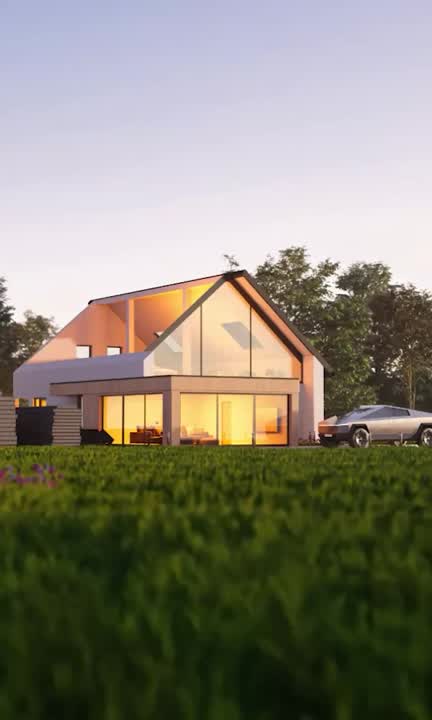
Our building envelope combines maximum efficiency with aesthetic freedom. Thanks to a selection of standard roof colors, the system blends harmoniously into any town or cityscape. The modular elements can be customized to blend architecture, energy generation, and design into a single, cohesive whole.
Overview
Electrical energy
sun

The ultra-thin and flexible solar film is firmly bonded to the topmost insulation layer and can be easily adapted to different building shapes. Thanks to the three-dimensional silicone coating, the photovoltaic film can be produced in virtually any color and with various decorative patterns. The special surface structure with a lens effect harnesses sunlight particularly efficiently, thereby increasing energy yield. At the same time, the golf-ball-like structure provides a self-cleaning effect, making it difficult for dust and dirt to adhere. The surface can be customized depending on the application and withstands even demanding environmental conditions such as desert dust, salty sea air, or ice.

The uniform appearance results from the seamless arrangement of the modules, which are manufactured in a continuous production process. As photovoltaic technology continues to evolve, the solar film can be easily replaced or upgraded to a higher-performance generation as needed, without having to replace the entire building envelope.
Thermal energy
warmth

The guide channels for the integrated solar thermal system are located directly beneath the PV film. Solar radiation heats the circulating fluid, which can then be stored and used, for example, for hot water production or heating systems.

The system offers an additional efficiency benefit: The medium dissipates excess heat from the PV film, thereby supporting high efficiency. During the winter months, the stored heat can be specifically used to reduce snow and ice buildup on roof surfaces and to maintain a stable temperature in the building envelope. This combines energy efficiency, comfort, and safety in a single system.
Mechanical energy
wind

Wind energy generation is a unique feature of our roofing solution. By integrating a wind turbine into the roof, natural wind power can be harnessed in addition to solar energy. The mechanical energy generated in this process is converted into electrical energy and stored. As a result, the roof contributes to the building’s energy supply even on cloudy days, in the evening hours, or when it’s windy.

The roof’s pitch and the smooth surface of the photovoltaic film optimize airflow over the wind turbine and promote efficient energy generation. At the same time, the turbine’s flexible mounting ensures smooth and quiet operation. Combined with photovoltaics and solar thermal systems, this creates a holistic energy system that makes the best possible use of available natural resources and supplements energy generation throughout the day.

Can be integrated into the Facade

Dachrinnen- und Verkleidungselemente

Full Area Solar Thermal Energy

Full Surface Photovoltaic Film

Can be Plastered on the Back

Self-Supporting Insulation Elements

Wind Turbine in the Roof Ridge

Peripherals and Energy Storage
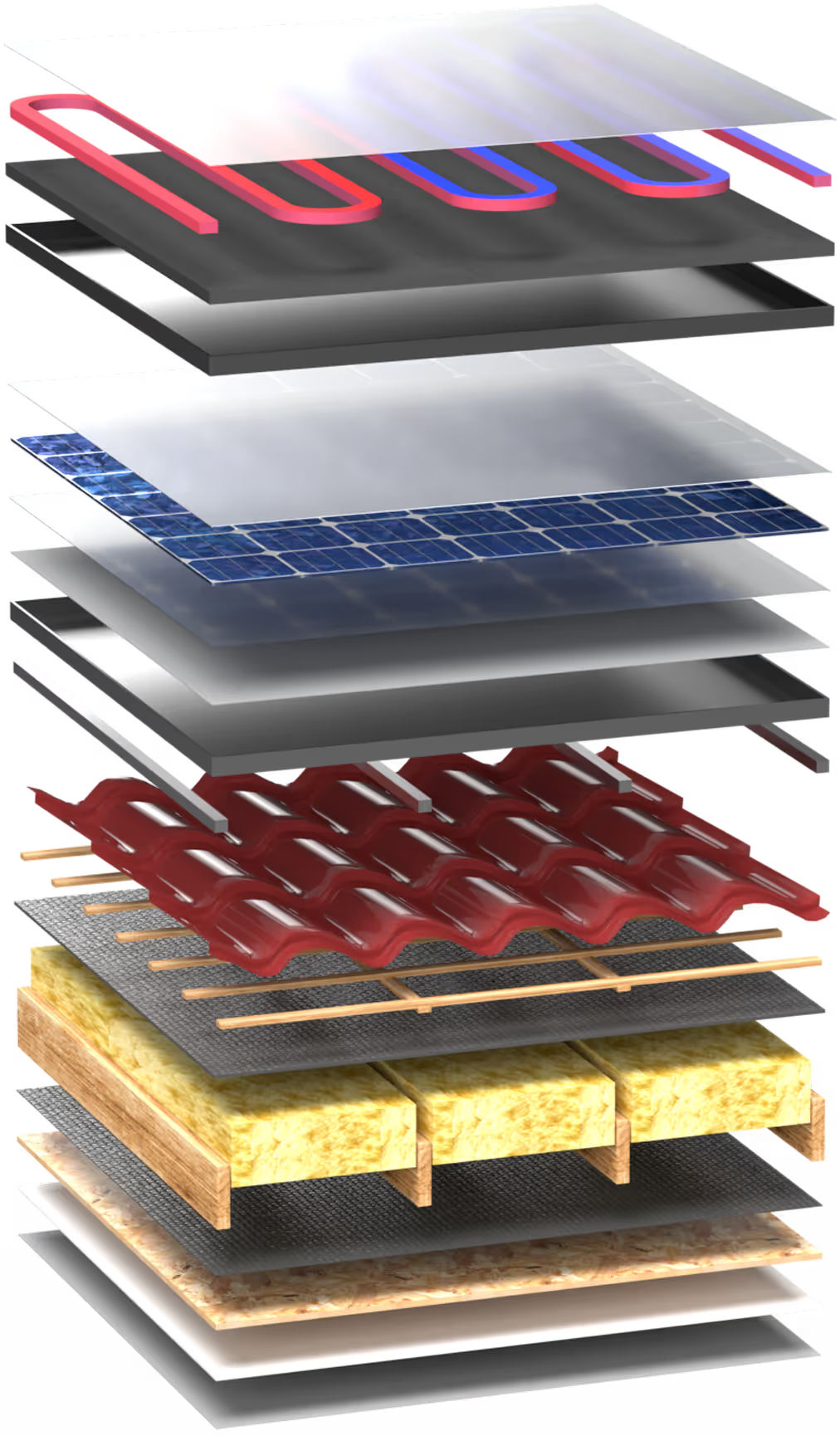
As an integrated solution for roofs and facades, the system combines energy generation, insulation, and weather protection in a single component. This saves on materials, simplifies the construction process, and reduces resource consumption. At the same time, the insulation material traps fine particulate matter and stores CO₂ over the long term. The result is a sustainable, energy-active building envelope for future-oriented construction.

sustainability

Reduction of
CO₂ emissions
Optimized Carbon Footprint Through Reduced Material Use: The Example of a Roof

The comparison shows the material layers of a conventional roof with a PV system and solar thermal panels in direct comparison to our SurPlus Energy System. While a conventional roof structure requires at least 20 layers to be stable, watertight, safe, and durable, as well as to generate thermal and electrical energy, our roof requires only about 6 layers—without compromising stability, watertightness, or safety. This reduction significantly improves the carbon footprint. Thanks to the lower material usage and reduced weight, installation is also simpler, faster, and more cost-effective.
min. 20
Material layers at
conventional roof structure
+ solar thermal
20. glass
19. pipes
18. insulation
17. aluminum frame
16. holders

+ Photovolthaik
15. glass
14. PV cell
13. glass
12. back wall
11. aluminum frame
10. brackets

+ roof structure
9. roof tiles
8. support batten
7. Sub-tension track
6. Insulation
5. roof truss
4. Vapor barrier
3. OSB plate
2. sheetrock
1. wallpaper
cca 6
layers of material with
SurPlus Energy
+ roof construction, photovoltaic and solar thermal energy

6. 3D structure
5. PV film
4. Insulation with carbon threads
3. fabric
2nd mounting bracket
1. wallpaper

Technical details

Our building envelope makes construction attractive again. Thanks to significant cost savings, attractive funding opportunities, and sophisticated functions, our system completely replaces conventional roof structures and facades. Hover over the following points to learn more.
+ Cost Savings

Our building envelope is self-supporting and therefore requires no additional roof truss, which results in significant cost savings during home construction. The insulation elements consist largely of a Styrofoam-like material that is extremely lightweight. This enables faster construction and reduces the need for labor. Thanks to its versatile design, the building envelope is suitable for both roofs and energy-efficient facades. In addition, our system allows you to take advantage of various subsidy programs, which enable further cost savings. SurPlus Energy makes building a home attractive again.

+ Time and assembly costs

The components of our building envelope are significantly lighter than conventional roof and facade structures. This allows them to be installed quickly and efficiently with minimal labor. There is no need for labor-intensive work with heavy wooden beams. The system is designed so that it can be flexibly adjusted directly on the construction site without the need for heavy tools. Cutouts for skylights, doors, windows, or technical installations can be easily and precisely made on site with a saw.

+ Defrost function

Integrated solar thermal technology offers a unique added benefit for the building envelope. The smooth surface of the photovoltaic film allows snow to accumulate and slide off more easily in winter. To prevent an increased risk of roof avalanches, a heated medium is automatically circulated through the system. This de-ices the roof surface before large amounts of snow can come loose. The heat generated is not lost in the process: The medium is stored and can be reheated and reused during the day. In this way, the system combines safety, energy efficiency, and intelligent heat utilization in a single solution.

+ Golf Ball Technology

The photovoltaic film features a specially developed surface structure modeled after a golf ball. This creates a lens effect that efficiently directs sunlight from various angles onto the surface, optimizing energy yield. At the same time, the self-cleaning surface ensures that dust, dirt, and deposits have difficulty adhering to it. As a result, performance is maintained even under demanding conditions such as desert dust, salty sea air, or ice. Furthermore, the surface structure can be specifically tailored during the production process to suit different applications and requirements.

+ Surety

High-strength carbon fiber strands are integrated into the elements of our building envelope and are firmly bonded to the insulation material during the production process. They give the self-supporting components their high stability while keeping their weight low. In addition, carbon fibers are characterized by their high temperature resistance. In the event of a fire, the carbon fiber structures can maintain their load-bearing function for a longer period and continue to support the PV film above them. This increases the stability of the structure and helps maintain the structural integrity of the building envelope even under extreme conditions.

+ PVD Research

Photovoltaic technology is constantly evolving, achieving ever-higher efficiency, greater durability, and improved performance. Our building envelope is already prepared for this development today. Should a technological upgrade be advisable in the future, a new photovoltaic film can be easily installed over the existing surface. The effort required for modernization remains minimal, and the costs are also significantly lower than those associated with a complete replacement of the structure. This ensures that your building envelope remains future-proof in the long term and can be flexibly adapted to the latest state of the art.

+ Sustainability

Our building envelope is self-supporting and requires no additional substructure, which significantly reduces one of the major cost factors in home construction. The insulation elements are largely made of a Styrofoam-like material, making them particularly lightweight. This enables quick and efficient installation while reducing labor requirements. Thanks to its versatile design, the building envelope is suitable for both roofs and facades, creating a seamless, energy-efficient building envelope from a single system. In addition, builders benefit from attractive subsidy opportunities that enable further cost savings. SurPlus Energy makes sustainable and economical construction attractive once again.

+ 24/7 Energy Production

Thanks to the smart combination of three different energy sources, our roof can generate energy around the clock. During the day, solar radiation on the photovoltaic film generates electrical energy, while the resulting heat is simultaneously converted into thermal energy and stored. When the wind blows during the day, our wind turbine also generates mechanical energy. At night, during a storm, or when the wind picks up again, the turbine is set in motion once more and produces additional energy, which is fed into the system and stored.

Together, we're changing the world.
We the world.

Are you a manufacturer or investor and interested in implementing our system? Feel free to contact us directly via the enquiry form. Are you an end customer and would like to use our system? Feel free to join our waiting list to receive updates and be notified when our system is available. We are looking forward to seeing you!
Thank you! Your submission has been received!
Oops! Something went wrong while submitting the form.